Mowing efficiency: why bigger mowers lose more time to turns
A 72-inch zero-turn is rated at nearly four times the acres an hour of a 36-inch walk-behind. On a typical yard it keeps 64% of that pace; the walk-behind keeps 78%. Here is where the time goes.
- 78%of its rating, 36" walk-behind
- 75%of its rating, 48" zero-turn
- 64%of its rating, 72" zero-turn
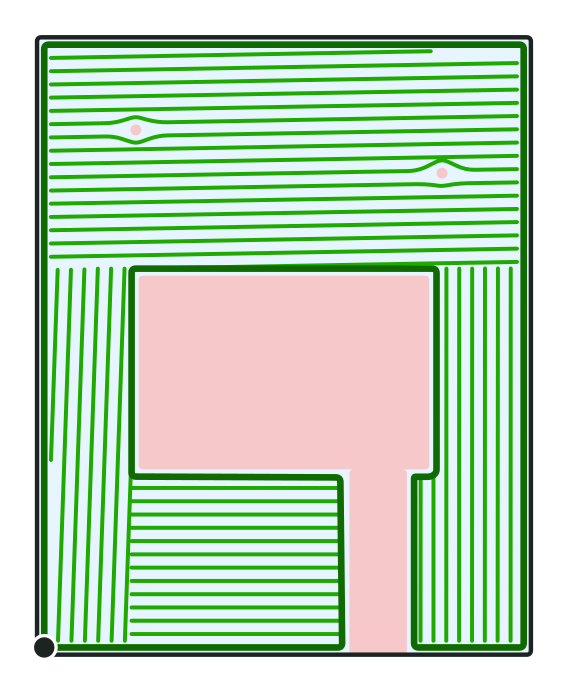
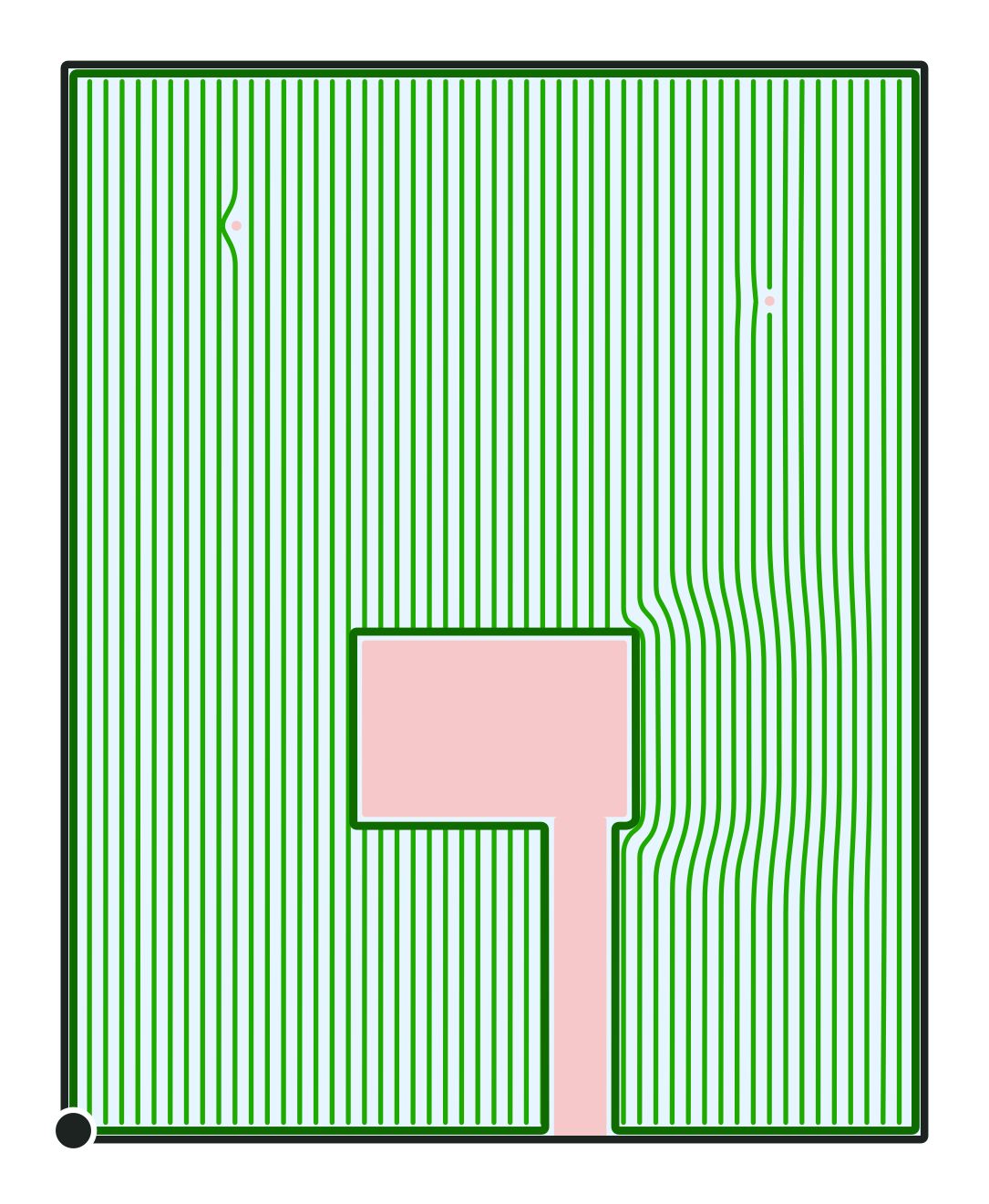
36" walk-behind 48 passes · 18 min mowing
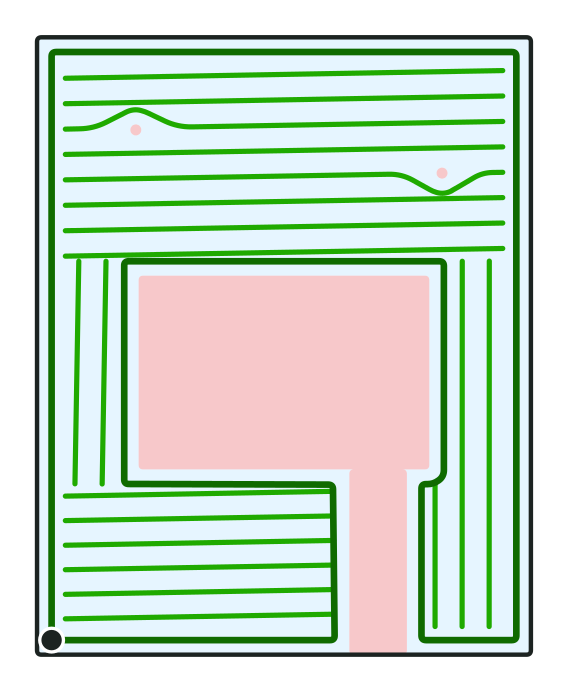
72" zero-turn 19 passes · 6 min mowing
Rated versus real
| Mower | Rated | Typical acre | Kept |
|---|---|---|---|
| 21" push | 0.36 ac/hr | 0.30 ac/hr | 83% |
| 36" walk-behind | 1.24 ac/hr | 0.97 ac/hr | 78% |
| 48" zero-turn | 2.42 ac/hr | 1.83 ac/hr | 75% |
| 60" zero-turn | 3.52 ac/hr | 2.51 ac/hr | 71% |
| 72" zero-turn | 4.58 ac/hr | 2.91 ac/hr | 64% |
Rated: deck width times speed, as if the mower never turned. Typical acre: mowing only, on routes the Mow Mapper planner laid out round a house, a driveway, a bed and a couple of trees.
The 72-inch is rated at nearly four times the 36-inch, and it is still by far the fastest. But it keeps only 64% of its rated pace on a typical acre, where the 36-inch keeps 78% and the 21-inch push mower 83%.
Where the time goes: the turns
Every pass ends in a turn, and a turn takes about the same time whatever the deck. A wider deck needs fewer passes, but it finishes each one so much sooner that the turns become a bigger share of its day.
| Mower | Passes across an acre | Each turn | Turns, share of the mowing |
|---|---|---|---|
| 21" push | about 130 | 3 s | 3% |
| 36" walk-behind | about 76 | 3.5 s | 8% |
| 48" zero-turn | about 57 | 4 s | 13% |
| 72" zero-turn | about 38 | 5 s | 18% |
A square open acre, about 209 ft across, with a little overlap between passes. Mowing time from planned routes.
That is the whole story of mowing efficiency in one table: the push mower spends hardly any of its time turning because it spends so long on each pass. Overlap, the lap round the edge and stopping short at beds and trees take the rest.
When a bigger deck pays off
On big open ground, always: the passes are long and the turns are few. On small, busy yards, much less. On a 2,500 sq ft yard full of beds and trees, the planner had the 72-inch taking 8 min and the 60-inch 7 min. And a wide deck that does not fit through the gate is no use for the backyard at all.
So pick the deck for the yards you actually mow. Run your typical yards through the time calculator with two mowers and see what the difference is worth across a week.
The formula
Acres per hour=Deck width, inches×Speed, mph×Efficiency divided by 99
The 99 is what one inch of deck covers in an hour at one mile an hour, turned into acres. A 60-inch deck at 5.8 mph at 71% efficiency cuts 2.50 acres an hour.
Free toolMowing efficiency calculatorDeck width and speed in, acres an hour out, with the efficiency measured from planned routes for each size of deck.Work out acres per hour