Starting a mowing business: what you need for spring
Spring is when most mowing businesses start, and when most customers pick somebody for the year. Here is what to have ready by then, in the order it matters.
1Decide what you will do, and what you won't
Mow, trim and blow is a complete service, and the one every customer needs. Treatments, landscaping and cleanups can come later. Starting with one service keeps the equipment, the pricing and the day simple.
2Pick a mower for the yards you will mow
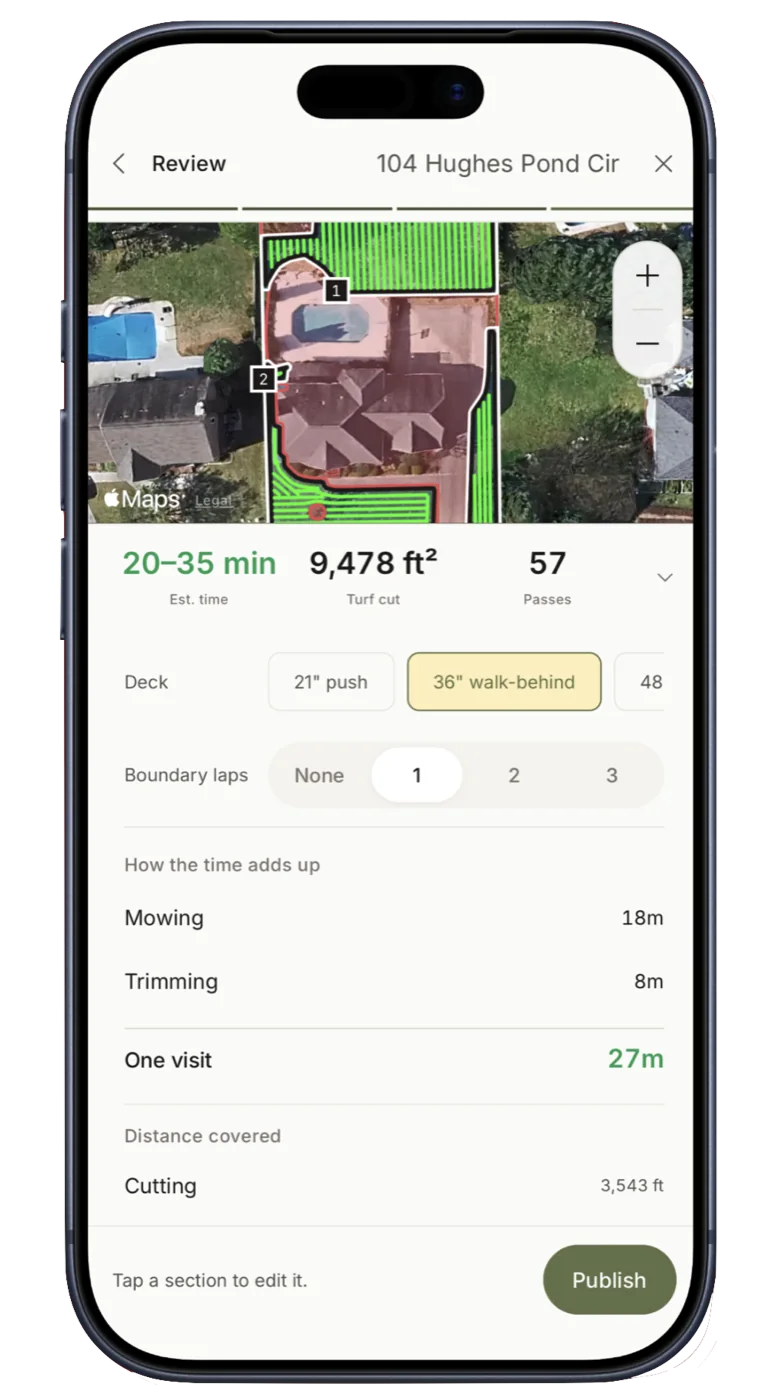
The mower decides how many yards fit in a day. A typical quarter-acre yard takes about 1 hr with a 21-inch push mower, 25 min with a 36-inch walk-behind, and 17 min with a 48-inch zero-turn, trimming included. A good used mower is a fine start; check that it fits through the gates in the neighborhoods you are after, and budget for a trailer if it will not fit in the truck.
Free toolMowing time calculatorCompare mowers on the yards you expect to mow before you buy one.Compare mowers3Get the paperwork right
- Register the business the way your state asks, and check whether your city or county needs a business license.
- General liability insurance, for the rock that goes through a window. Some homeowners will ask, and commercial customers usually require it.
- Taxes: set a share of every payment aside, and keep every receipt for fuel, parts and equipment.
The rules vary from place to place, so check locally rather than guessing.
4Set your prices before anyone asks
Work out an hourly rate that covers the whole day, set a minimum per visit, and know what your common yard sizes come to. The pricing guide walks through it.
5Keep the route tight
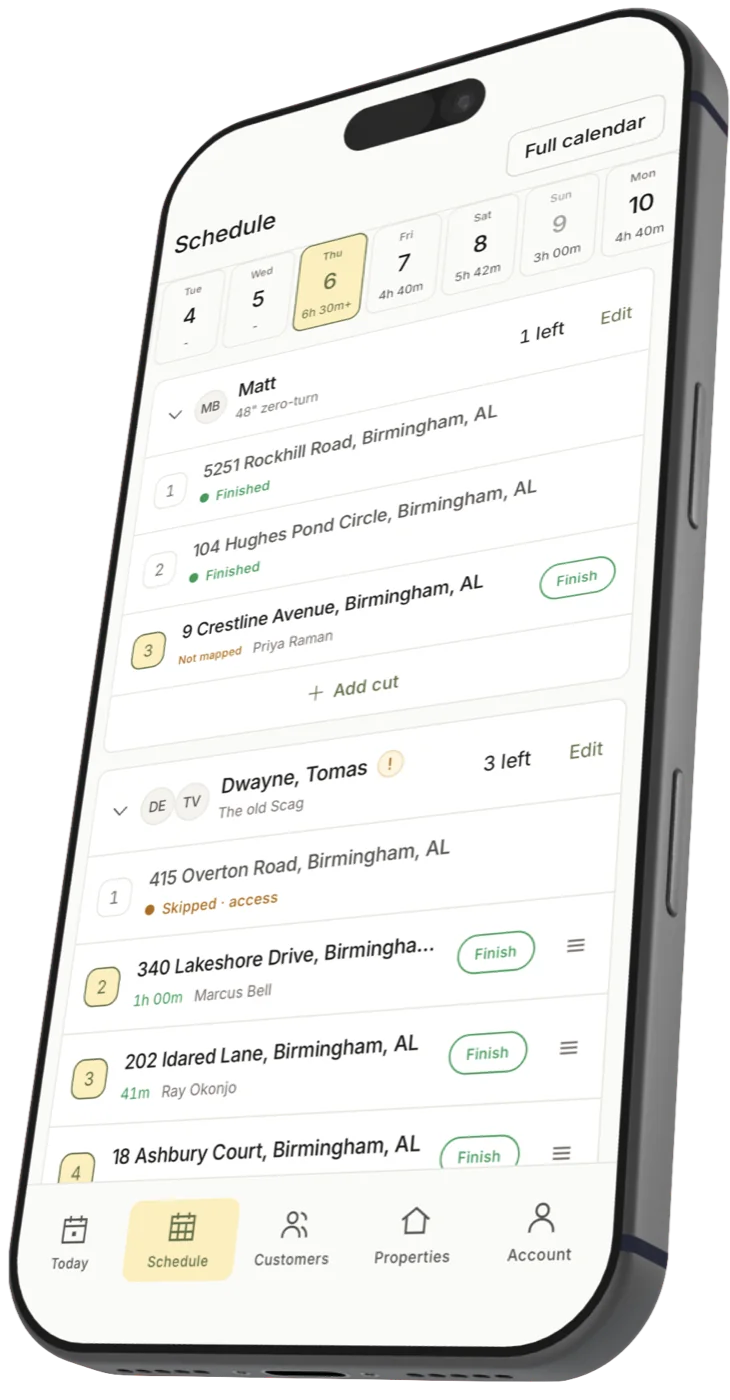
Driving between yards is time nobody pays you for. Ten yards on two streets beat ten yards across town. Say yes to the neighbors of customers you already have, and mow each neighborhood on the same day.
6Find your first customers
- Your own street and the streets around it.
- Door hangers in one neighborhood at a time, so the yards end up together.
- Nextdoor and the local Facebook groups, where people ask for exactly this.
- A Google Business Profile, so you show up when somebody searches nearby.
- Asking happy customers to tell a neighbor.
Then answer fast. The quickest honest quote usually wins, and you can quote from the map the same hour somebody asks.
7Decide how you will get paid
Get paid at the visit or the same day, not at the end of the month. Most customers already have Venmo, Cash App or PayPal, and a link with the amount filled in gets paid fastest. Checks and cards work too; the point is to ask right after the job, every time.
8Plan for rain and the spring surge
Keep a day a week loose for rain. In spring the grass grows fast enough that every-other-week yards turn into overgrown ones, so some crews only take weekly customers until the growth slows.