How to price slopes, trees and obstacles
A lone tree barely moves the clock. Beds, edges and slopes are where the time goes, and the risk of steep ground is worth more than its minutes. Here is what each one actually adds.
- 9 secondsEach tree, 48" zero-turn
- 22 secondsEach island bed
- +18%A bank across the lawn
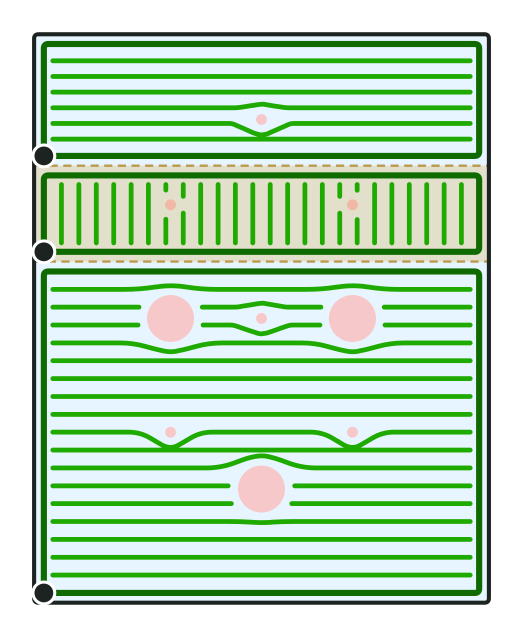
48" zero-turn Up and down the bank
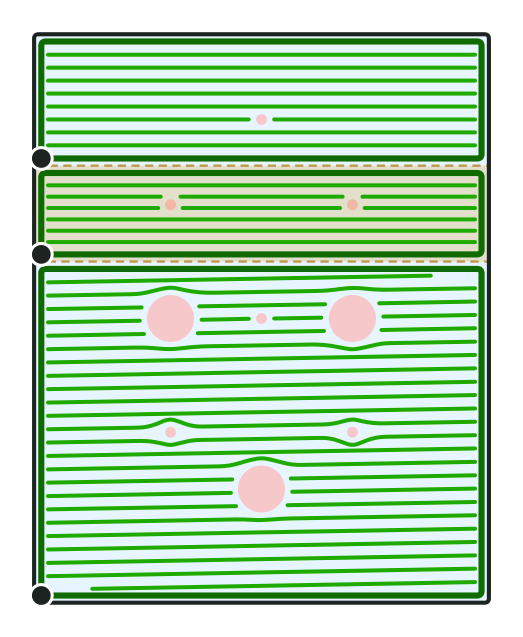
36" walk-behind Across the bank
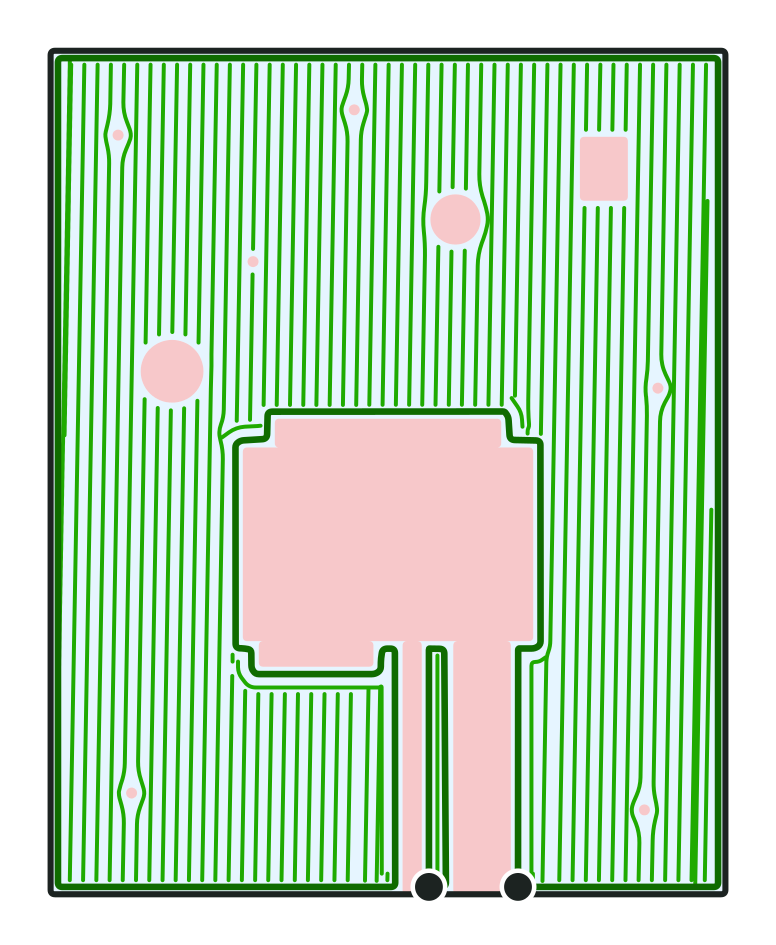
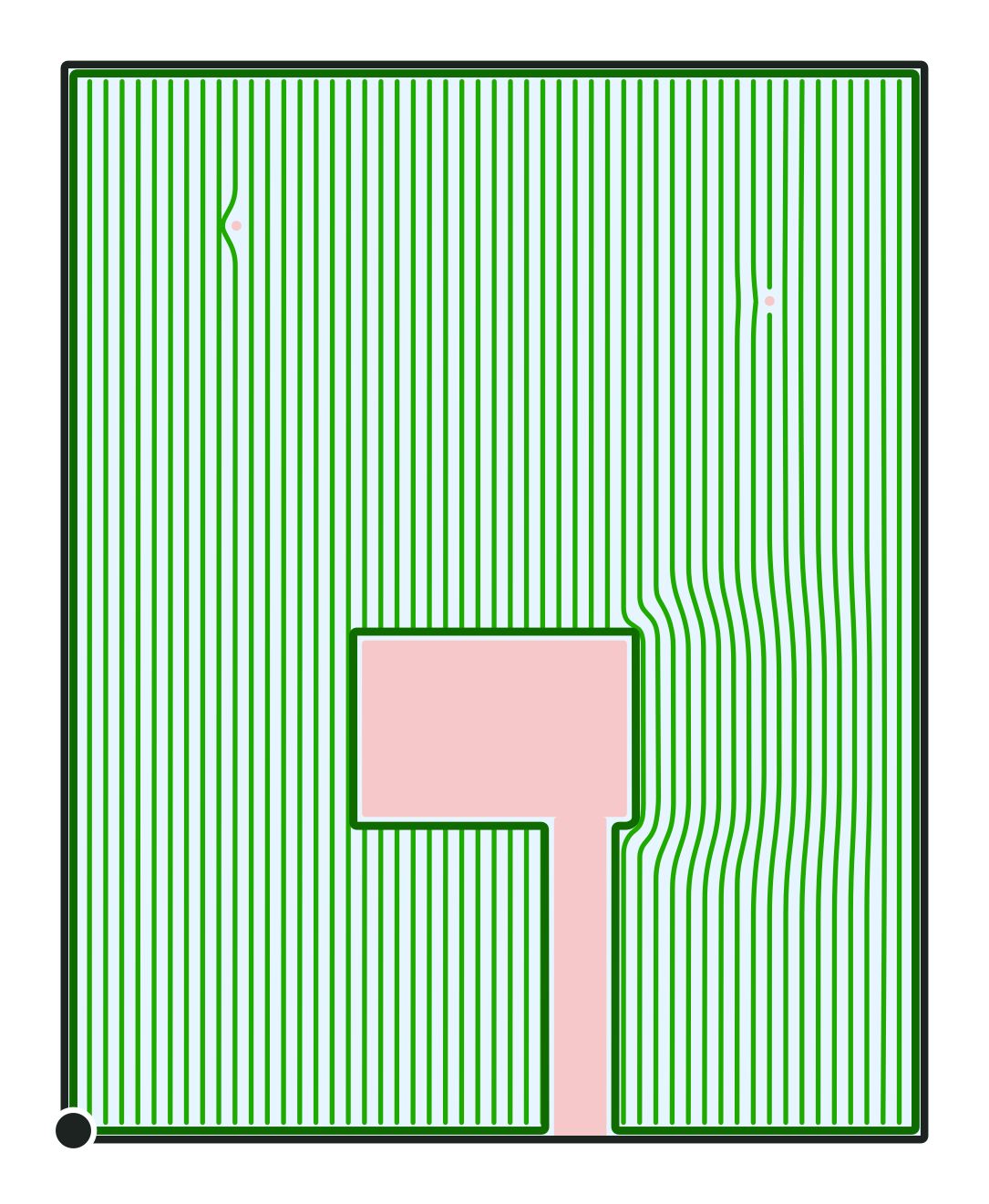
We planned the same quarter-acre lawn (10,890 sq ft) through the Mow Mapper route planner again and again: open, then with trees added one at a time, then island beds, then a bank across it. The difference each time is what that thing costs you.
What each thing adds
| Mower | Each tree | Each bed | A bank |
|---|---|---|---|
| 21" push | 13 seconds | 21 seconds | 2 min (+4%) |
| 36" walk-behind | 5 seconds | 24 seconds | 2 min (+11%) |
| 48" zero-turn | 9 seconds | 22 seconds | 2 min (+18%) |
A quarter-acre lawn, one person, mowing and trimming. Trees are trunks set out in open lawn; beds are about 10 ft across; the bank is 20 ft deep across the whole lot at a 20% grade, about a sixth of the lawn.
Trees: price the cluster, not the count
A trunk standing on its own in the lawn costs seconds: the mower bends round it and the trimmer goes round it once. What actually costs time with trees is everything that comes with them: mulch rings, roots, low branches you have to duck, and the leaves. Price those, and treat a tight group of trees as one bed rather than counting trunks.
Beds: every edge is trimming
Each island bed added around 22 seconds with a zero-turn, mostly trimming round its edge. A yard with a bed in every corner and a border along the fence adds up quickly, and edging the beds properly is a separate job worth its own price.
Slopes: their own piece, mown the safe way
The bank added about 2 min to a 12 min zero-turn job, 18% more, because it gets mown as its own piece, with its own lap and its passes turned to suit the slope instead of the lawn. Which way they run depends on the mower, and the reason is safety, not speed.
The clock is only part of it. Steep ground wears tires and turf, and it carries a risk that flat ground does not. Every mower's manual gives a slope limit, and a zero-turn's is lower than most people guess; past it, the bank is a walk-behind or trimmer job, and priced as one.
Gates, fences and tight spots
- Gates narrower than your deck turn the backyard into a push-mower job, which is a lot slower.
- Fences are trimming along every foot of them.
- Narrow strips are mostly turns, and turns are where a mower loses its time.
Turning it into a price
Time the yard as it really is, then price the time. At $75 an hour the bank above is worth about $3 of clock, which is why the risk and the wear matter more than the minutes. A simple way to quote it: a base price from the size and time, plus a named add-on for a steep bank, bagging or a backyard behind a narrow gate. Customers understand an add-on they can see.
Free toolMowing price calculatorPick an open, typical or busy yard and your mower, and price the time it really takes at your hourly rate.Price a yard